

If you’ve been considering a procedure or treatment, you may be wondering whether your Flexible Spending Account (FSA) or Health Savings Account (HSA) can help cover the cost.
The answer is: sometimes.
While many people associate FSAs and HSAs with doctor’s visits and prescriptions, these accounts can also be used for certain medical procedures and treatments when specific requirements are met. Understanding what may qualify can help you make the most of your healthcare benefits while investing in your health, comfort, and confidence.



What Are FSA and HSA Accounts?
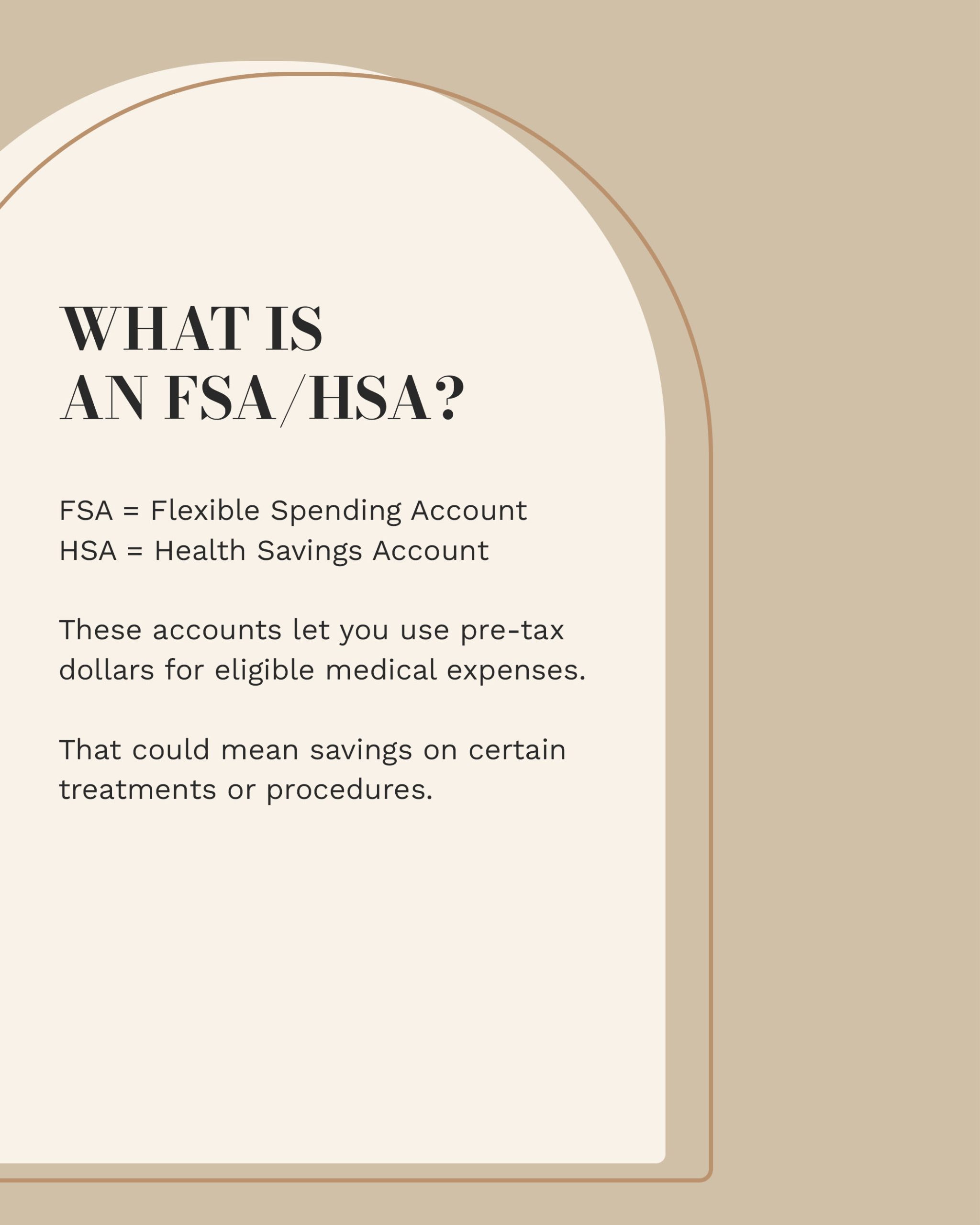
FSAs and HSAs are tax-advantaged accounts designed to help individuals pay for eligible healthcare expenses using pre-tax dollars.
Because contributions are made before taxes, these accounts can help reduce your overall healthcare costs. Depending on your plan, you may be able to use these funds for a wide range of medical services, treatments, and procedures.
Can Plastic Surgery Be Covered by an FSA or HSA?
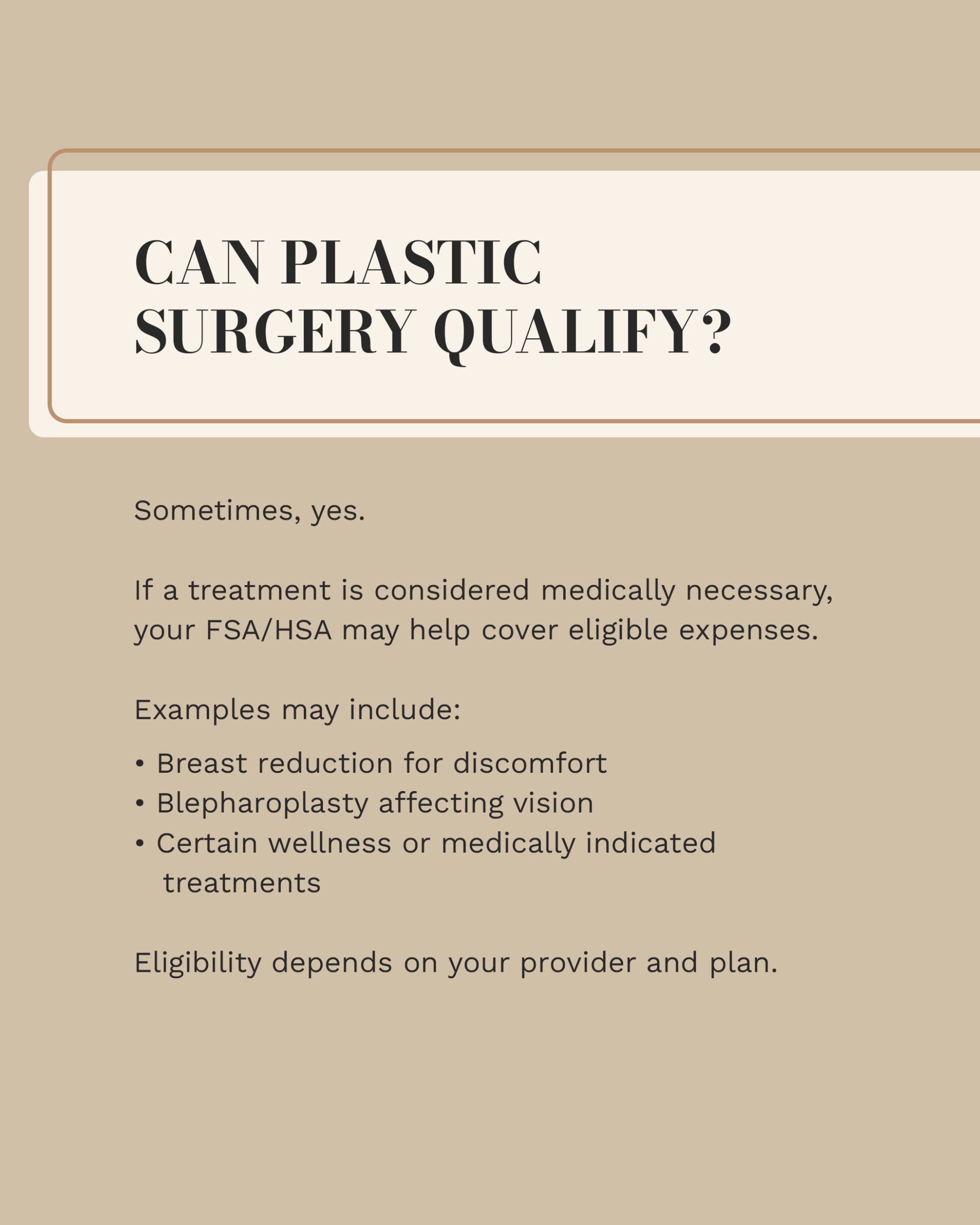
In some cases, yes.
The IRS generally allows FSA and HSA funds to be used for treatments that are considered medically necessary. This means the procedure is intended to diagnose, treat, or alleviate a medical condition rather than solely improve appearance.
Examples that may qualify include:
- Breast reduction performed to relieve chronic neck, back, or shoulder discomfort
- Blepharoplasty (eyelid surgery) when excess skin interferes with vision
- Reconstructive procedures following injury, illness, or surgery
- Certain wellness-related treatments recommended for medical purposes
Every situation is unique, and eligibility ultimately depends on your specific benefits plan and provider requirements.
What Treatments Typically Do Not Qualify?
Procedures performed solely for cosmetic reasons are generally not eligible for FSA or HSA reimbursement.
Examples may include:
- Cosmetic wrinkle relaxer treatments
- Dermal fillers for aesthetic enhancement
- Elective cosmetic surgery without a documented medical necessity
However, requirements can vary between plans, which is why it’s always important to verify coverage with your benefits administrator.
What Documentation May Be Required?
If you plan to use your FSA or HSA funds, you may need documentation to support your claim.
This can include:
- A consultation with your provider
- Medical records or supporting documentation
- A Letter of Medical Necessity
- An itemized receipt for services rendered
The exact requirements will depend on your account administrator and insurance plan.
Why Patients Explore FSA and HSA Options
Many patients are surprised to learn that pre-tax healthcare funds may be available to support eligible treatments.
Using an FSA or HSA can potentially help:
- Reduce out-of-pocket healthcare costs
- Maximize benefits before they expire
- Support procedures that improve comfort, function, or quality of life
- Make medically necessary treatments more accessible
How bŏdze Can Help
At bŏdze, we believe patients should have the information they need to make confident decisions about their care. During your consultation, our team can discuss your goals, review treatment options, and help you understand what documentation may be needed if you plan to explore FSA or HSA reimbursement.
While we cannot determine coverage on behalf of your benefits provider, we are happy to help guide you through the process and answer questions along the way.
Schedule a Consultation
If you’re considering a procedure or treatment and would like to learn more about your options, contact bŏdze to schedule a consultation. Our experienced team is here to help you explore treatments that support your goals while providing thoughtful guidance every step of the way.
