
Recovering from breast augmentation is about more than simply resting—it’s about giving your body the support it needs to heal comfortably and achieve the best possible outcome. At bŏdze, we believe your recovery is just as important as your procedure, which is why we guide our patients through gentle breast exercises, also known as breast massages.
Despite the name, these aren’t workouts. They’re gentle, controlled movements that apply consistent pressure to the implants and surrounding tissues. When performed as instructed by your surgeon, these exercises can help support healing, improve comfort, and encourage your implants to settle naturally over time.
Why Are Breast Exercises Important?
After breast augmentation, your body naturally forms scar tissue around each implant as part of the healing process. This is completely normal. Gentle breast exercises help encourage healthy healing by:
- Supporting natural implant positioning
- Maintaining tissue elasticity and softness
- Minimizing excessive scar tissue formation
- Improving comfort as swelling and tightness decrease
- Helping reduce the risk of capsular contracture
These exercises are an important part of your recovery plan, but they should only be started after you’ve been cleared by your surgeon.
Important: Every patient’s recovery is unique. Always follow your surgeon’s specific timeline and instructions before beginning breast exercises.
Exercise 1: Arm Raises
The first exercise uses your chest muscles to gently help the implants settle into position.
How to Perform It
- Slowly raise one arm overhead and lower it back down.
- Repeat with the opposite arm.
- Then raise both arms overhead together before lowering them in a controlled motion.
- Perform the movement slowly without forcing your range of motion.
What It Does
As your pectoral muscles move, they gently massage the implants into place. This exercise also helps reduce chest tightness and restore comfortable shoulder movement during recovery.
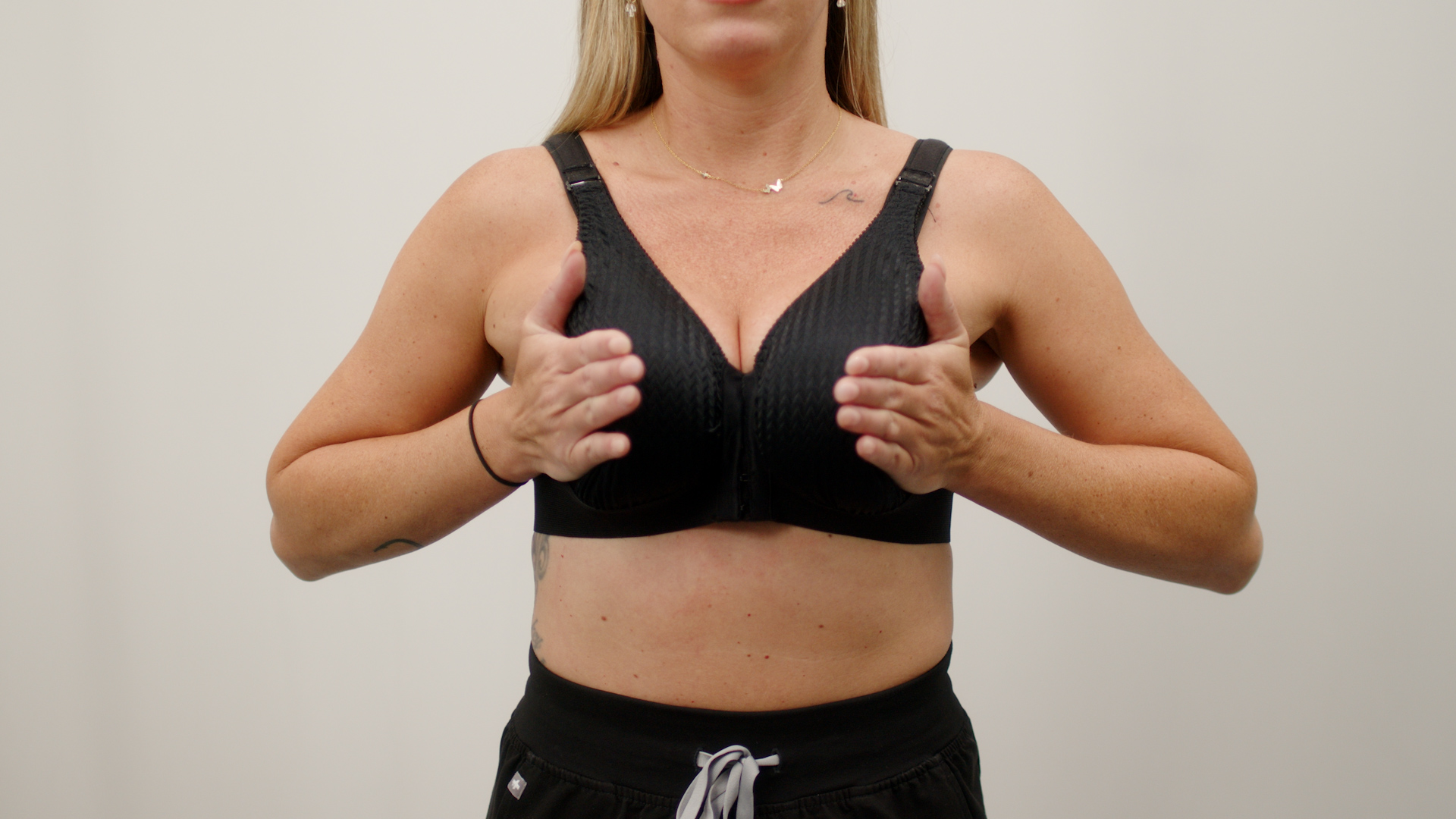
Exercise 2: Inward Compression
This massage applies gentle pressure from the sides of the breasts.
How to Perform It
- Place one hand on the outside of each breast.
- Gently press both breasts toward the center of your chest.
- Hold the pressure for 30 seconds to 1 minute before slowly releasing.
What It Does
This consistent pressure helps encourage the implants to settle naturally while maintaining flexibility of the surrounding tissues during healing.
Exercise 3: Downward Implant Massage
The final exercise gently encourages downward implant movement.
How to Perform It
- Using your opposite hand, reach across your body.
- Apply gentle pressure inward and downward on the implant.
- As you press, you should feel the implant move underneath the breast. This is a good indication you’re performing the massage correctly.
- Repeat on the opposite side.
What It Does
This massage helps maintain implant mobility, encourages proper positioning, and supports healthy scar tissue formation around the implant as your body heals.
How Often Should You Perform These Exercises?
Your surgeon will provide instructions that are specific to your procedure and recovery. Follow those directions carefully.
The most important part of these exercises is consistency. Performing them regularly, exactly as instructed, can help support a smoother recovery and encourage your implants to settle properly over time.
What Should These Exercises Feel Like?
Healing doesn’t end when your surgery is complete. Your post-operative care plays an important role in your overall outcome, and we’re committed to supporting you throughout every stage of your recovery.
If you have questions about your breast exercises or aren’t sure whether you’re performing them correctly, don’t hesitate to reach out to our team. At bŏdze, we’re here to guide you every step of the way, helping you heal with confidence while supporting the beautiful, natural-looking results you’ve been working toward.
Recovery Is a Partnership
It’s normal to feel pressure, tightness, or mild discomfort while performing your breast exercises, especially during the early stages of healing.
However, you should never experience sharp or severe pain. If something feels painful or doesn’t seem right, stop performing the exercise and contact your surgeon before continuing.
Remember, these movements should always be gentle and controlled—never forced.
